
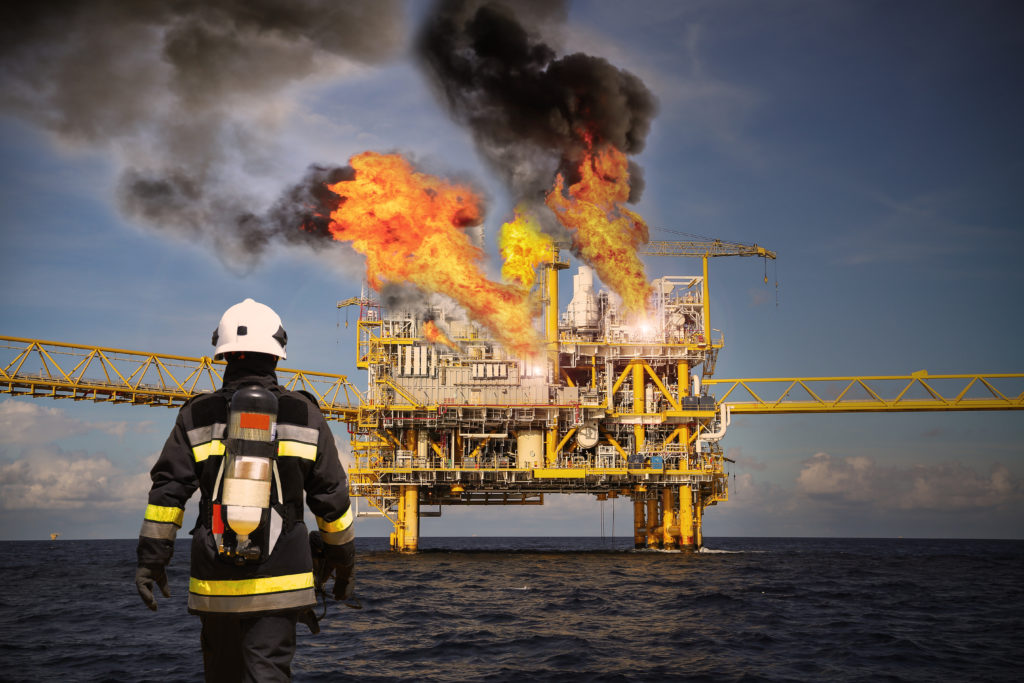
Integration of Fire & Gas Systems with ESD for Maximum Offshore Safety
Offshore platforms and Floating Production Storage and Offloading (FPSO) units operate in environments where fire and gas hazards can escalate within seconds. When such events occur, safety systems must act automatically, reliably, and in perfect coordination.
This is why Fire & Gas (F&G) systems and Emergency Shutdown Systems (ESD) must be tightly integrated. For offshore operators and consultants, proper Fire and Gas ESD integration is not just a design preference—it is a critical safety requirement.
1. Role of Fire & Gas Systems in Offshore Safety
The Fire & Gas system provides early detection of hazardous events, including:
-
Hydrocarbon gas leaks
-
Smoke and flame detection
-
Toxic gas presence
-
Heat and fire escalation
Once detected, the system must immediately trigger protective actions—and this is where integration with ESD becomes essential.
2. Why Fire & Gas and ESD Must Work Together
Fire & Gas systems detect hazards, but ESD systems execute the protection. Without proper integration, detection alone is not enough.
A well-integrated system ensures:
-
Rapid isolation of hydrocarbon sources
-
Controlled shutdown of process units
-
Activation of deluge, ventilation, and alarms
-
Safe evacuation pathways for personnel
On FPSOs, where escape routes are limited and hydrocarbon inventory is high, every second matters.
3. Typical Fire & Gas to ESD Integration Scenarios
In offshore applications, Fire & Gas systems commonly initiate ESD actions such as:
-
Gas detection → Process unit shutdown
-
Fire detection → Area ESD and depressurization
-
Multiple detector voting → Full platform ESD
-
Toxic gas detection → HVAC shutdown and alarms
These actions must be clearly defined in the Cause & Effect Matrix and verified during testing.
4. Common Integration Challenges on Offshore Platforms
Despite its importance, Fire and Gas ESD integration often suffers from:
❌ Poorly defined Cause & Effect logic
❌ Misalignment between F&G and ESD vendors
❌ Communication delays between systems
❌ False trips causing unnecessary shutdowns
❌ Inadequate testing due to limited downtime
These issues increase operational risk and production losses if not addressed early in the design phase.
5. Best Practices for Fire and Gas ESD Integration
To achieve reliable and compliant integration, offshore operators should follow these best practices:
a. Unified ICSS Architecture
Use an Integrated Control and Safety System (ICSS) where DCS, ESD, and F&G are engineered under a single architecture while maintaining functional independence.
b. Clear Cause & Effect Definition
Ensure all fire and gas detection events and corresponding ESD actions are:
-
Clearly documented
-
Verified by multidisciplinary teams
-
Aligned with HAZOP and LOPA studies
c. SIL-Compliant Design
All ESD actions triggered by F&G must comply with IEC 61511 SIL requirements, including redundancy, diagnostics, and proof testing.
d. Robust Testing & Validation
Perform:
-
Factory Acceptance Testing (FAT)
-
System Integration Testing (SIT)
-
On-site validation and periodic proof testing
This ensures systems perform exactly as designed during real emergencies.
6. Role of the System Integrator in Offshore Safety
Successful Fire and Gas ESD integration requires more than equipment—it requires deep offshore engineering expertise. The right system integrator ensures:
✔ Vendor-neutral integration
✔ Compliance with IEC, API, and offshore regulations
✔ Reliable communication and redundancy design
✔ Lifecycle support, audits, and upgrades
This significantly reduces safety risks while maintaining production efficiency.
Conclusion
Effective Fire and Gas ESD integration is one of the most critical elements of offshore safety engineering. For FPSOs and offshore platforms, a properly integrated system protects lives, assets, and production continuity when hazardous events occur.
👉 If you are reviewing, upgrading, or designing Fire & Gas and ESD systems for an offshore facility, contact us today. We help operators and consultants achieve safe, compliant, and reliable offshore ICSS solutions.
Keywords: DCS, ICSS, ESD (emergency shutdown), FGS, Platform
Contact: +6017-347 5015 (Faiq:Head of DCS Team)
